.png?width=500&height=153&name=DiNovo%20Full%20Logo%20-%20Both%20Tags%20(500x153).png "DiNovo Full Logo - Both Tags (500x153)")



PPE Selection for USP <797>, USP <800>, and cGMP

Cleanroom PPE comes in all different shapes and sizes (literally). There are so many requirements that it can be confusing for operators, suppliers, and decision-makers to select the correct PPE to evaluate and implement into their Contamination Control Strategy (CCS). In this blog post, we will touch on some different industries and then dive into more detail when it comes to USP <797>, USP <800>, and cGMP requirements for PPE.
How do you choose?
Cleanroom PPE selection is highly dependent on the industry and, even within those industries, the quality requirements of what processes are being done within the cleanroom. Semiconductor and microelectronics are more concerned with total particle counts and, many times, ESD (electrostatic dissipative) properties to protect the highly sensitive products being manufactured in these spaces, while, on the other hand, pharmaceuticals are not only concerned about total particle counts but also viable microorganisms that, if allowed to contaminate the products they manufacture, could result in catastrophic patient outcomes and dire business ramifications. DiNovo specializes in PPE for environments that need peace of mind that they will meet expectations and pass regulatory scrutiny.
For USP <797>, the newest revision of the regulation details PPE requirements per category of CSP being compounded in their operation. For Category 1 & 2, non-sterile PPE is still appropriate; however, operations should be mindful that anything going into the ISO 5 PEC should be sterile. This is why some elect to don sterile sleeve covers to enhance their quality standards and make sure they limit the risk of non-sterile PPE being introduced into the hoods. For Category 3 CSPs, USP <797> outlines that sterile PPE should be used at all times. These PPE options usually involve donning PPE so that no skin is showing at all, sterile goggles and masks are used, and appropriate donning procedures are especially important. For operations compounding Category 3 CSPs, they need to write and follow quality standards that meet Category 3 expectations regardless of what category they are compounding on any given day; in other words, if they do Category 3 CSPs even one day during the year, they need to follow Category 3 expectations all year long. These expectations greatly mirror those of the cGMP world of sterile drug manufacturers.
USP <800> is aimed at protecting staff from hazardous drugs. These gowns follow specific guidelines such as sealed seams, testing via ASTM D6978 and/or ASTM F3267, back closures, and cuffed protected openings to mitigate exposure to hazardous drugs. USP <800> extends beyond just the cleanroom, so make sure to be familiar with all parts of USP <800> when it comes to receiving, handling, administering, and disposing of hazardous drugs.
For cGMP, they largely need similar processes to that of Category 3 CSPs. Stringent training and SOPs need to be in place, with environmental monitoring doing that background work and providing you with your “report card” on how your gowning procedures are working. Does your EM program keep showing staphylococcus and micrococcus organisms? This is an indicator that your PPE, gowning procedures, and employee training may need to be reviewed.
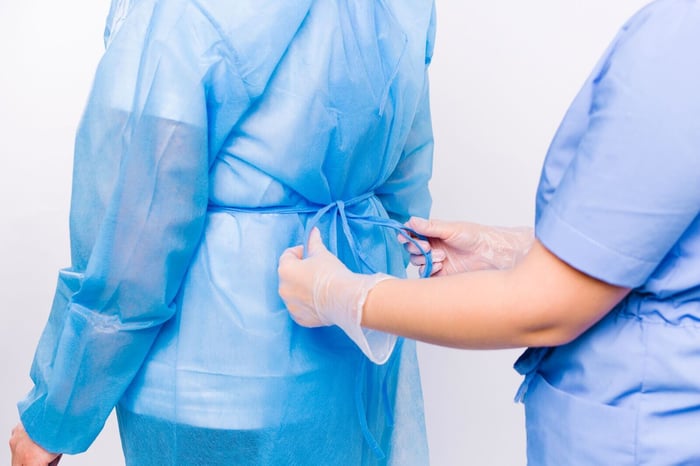
Key items to look at when selecting PPE:
- Material type: Balance breathability, comfort, durability, and barrier protection. SMS is typically more breathable, while MP can provide stronger splash and spill protection.
- Drug permeability: Especially important for USP <800>. Review whether gloves and garments have been tested against hazardous or chemotherapy drugs.
- Sterility: Determine whether sterile PPE is required based on the application, regulatory expectations, and patient risk.
- Particle generation: Confirm garments are appropriate for the cleanroom classification and do not introduce excessive particles or fibers.
- BFE vs. PFE: Understand the filtration performance of masks and select the appropriate option for the application.
- Coverage: Evaluate exposed skin, hair, and facial hair to minimize contamination from operators.
- Seams, cuffs, and closures: Garment construction can impact both contamination control and hazardous-drug protection.
- Comfort and sizing: PPE should fit properly and allow operators to work comfortably without frequent adjustments.
- Donning and doffing: Select PPE that supports consistent gowning procedures without increasing contamination risk.
- Configuration and SKU consolidation: Simplifying gowning components can improve training, inventory management, and supply continuity.
- Packaging: Consider how PPE is packaged and presented, particularly for sterile applications.
When it comes to your gowning needs DiNovo can guide you through the selection process and put the best blend of budget and functionality in front of your team. Reach out and chat with one of our technical experts today.
Save 5% on your next PPE order for a LIMITED TIME!
Use Code: BEYONDPPE
Delivering Compliance.
📞 866-963-6746
📧 customerservice@dinovomed.com
🔍 Check out all our PPE Solutions HERE!